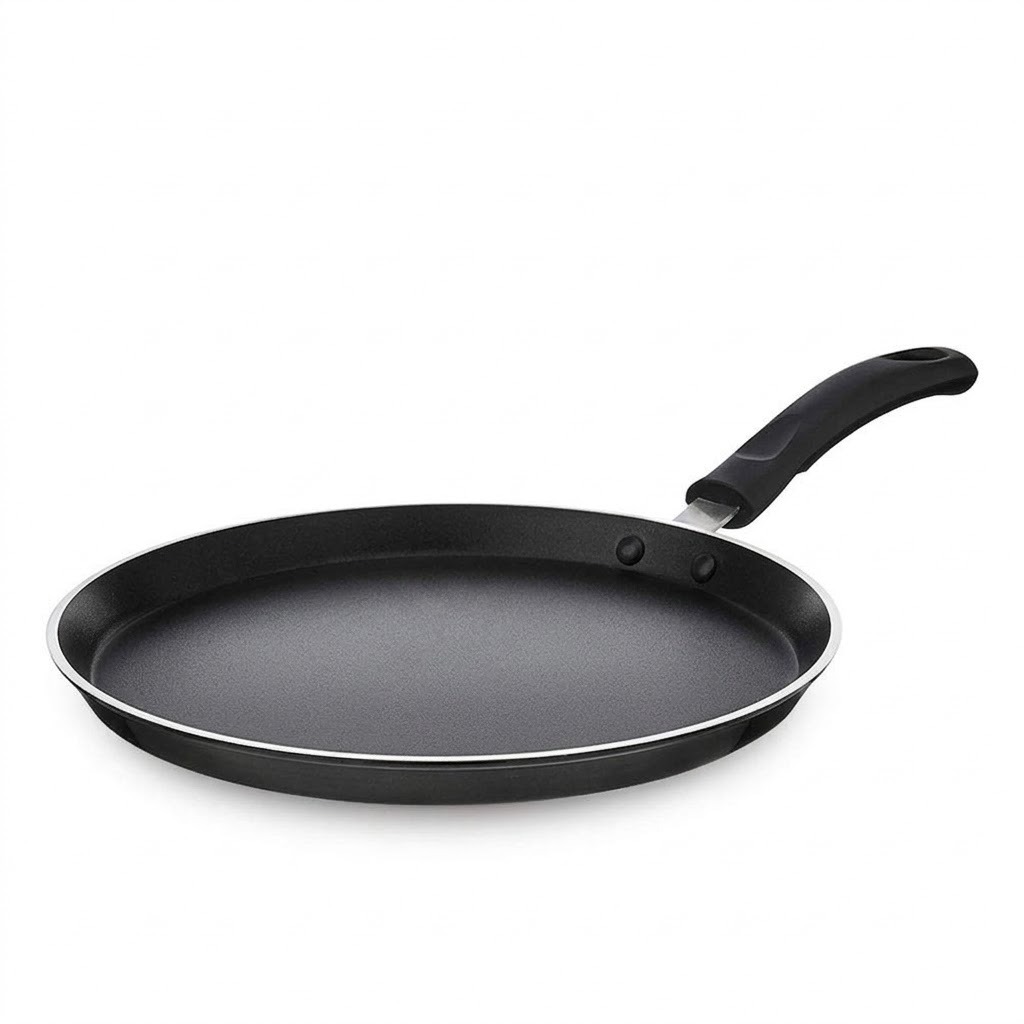
Non Stick Aluminium Cookware
Non-stick aluminum cookware is one of the most popular choices in modern kitchens because it is easy-to-clean cooking surface.The pan heats up almost instantly and spreads that heat evenly across the entire surface. High-Performance Non-Stick Surface-The interior of the aluminum base is coated with a hydrophobic (water-repelling) layer, usually made of PTFE (Polytetrafluoroethylene, or a ceramic silicon-gel.
Temperature Thresholds for PTFE
Up to 260°C (500°F) | Completely Safe: Within this range, PTFE is highly stable, chemically inert, and completely non-toxic. It will not leach into your food or release harmful substances. This comfortably covers all standard stovetop tasks like frying eggs, sautéing vegetables, and simmering sauces.
260°C to 300°C (500°F to 570°F) | Coating Degradation: The PTFE layer begins a process of thermal degradation. While it won't instantly vanish, the coating starts to break down structurally, losing its non-stick properties and shortening the lifespan of your pan.
Above 300°C (570°F) | Hazardous Zone: At these extreme temperatures, PTFE begins to rapidly decompose and release microscopic polymer fumes into the air. Inhaling these fumes can cause a temporary, flu-like condition in humans known as polymer fume fever (often called the "Teflon flu"), which involves chills, headaches, and body aches.
Safe Cooking (Low-to-Medium Heat)
Frying eggs or pancakes: Roughly 150°C to 180°C.
Sautéing vegetables or frying chicken: Roughly 180°C to 220°C.
High-Risk Cooking (Avoid with PTFE)
Searing meat or stir-frying: Often requires surface temperatures exceeding 260°C to 300°C to get a proper crust.
Broiling in the oven: Most oven broilers operate at temperatures well above 260°C, which can quickly destroy a non-stick coating.
Simple Rules to Prevent Overheating
Never preheat an empty pan: An empty non-stick pan on a high burner can rocket past 260°C in less than two minutes. Always add a small amount of oil, butter, or food to the pan before turning on the flame to help absorb the initial heat.
Stick to medium heat: Modern aluminum non-stick pans conduct heat efficiently. You rarely need to turn your stove dial past "medium" to get the pan to standard frying temperatures.
Switch pans for high-heat tasks: If a recipe calls for high-heat searing, blackening, or oven broiling, leave the non-stick pan in the cupboard and reach for cast iron, carbon steel, or stainless steel instead.